One of nine services under this roof
Electrical Repair
Electrical troubleshooting, alternator and starter repair, and battery replacement, on most makes and models, backed by a free warning light scan before anything gets diagnosed.
Starting problems, and telling the three causes apart
A car that won't start has three usual suspects, the battery, the starter, or the alternator, and a lot of vehicles get a new battery when the real fault was somewhere else. A slow crank that gets slower over a few cold mornings points toward the battery. A single click with no crank at all more often points to the starter or a bad connection at it. A car that starts fine but dies after a short drive, or one where the dash lights dim at idle, points toward the alternator not keeping the battery charged. We test all three, the battery, the charging system and the starter draw, before recommending a part, rather than replacing the battery and hoping.
What the warning light scan actually checks
A free warning light scan pulls the stored codes off the vehicle's computer, which narrows down the system involved before any parts get touched. That scan is free whether or not you end up doing the repair here. From there, electrical diagnosis is sensor and wiring work as much as it is parts replacement, tracing a circuit with a meter rather than swapping components until something happens to fix it.
Baxley's Auto Repair, 200 Longhills Rd W, Benton. Call (501) 466-7483.
Battery & chargingScanned free
Why a healthy-looking battery still fails a load test
A battery can hold a resting voltage that looks fine on a basic meter check and still fail under real load, because the test that matters is whether it can deliver current under starting draw, not whether it's sitting at 12.6 volts on the shelf. We load test the battery rather than reading voltage alone, which is the difference between finding a battery that's actually weak and clearing one that's fine and sending someone home to buy a part they didn't need.
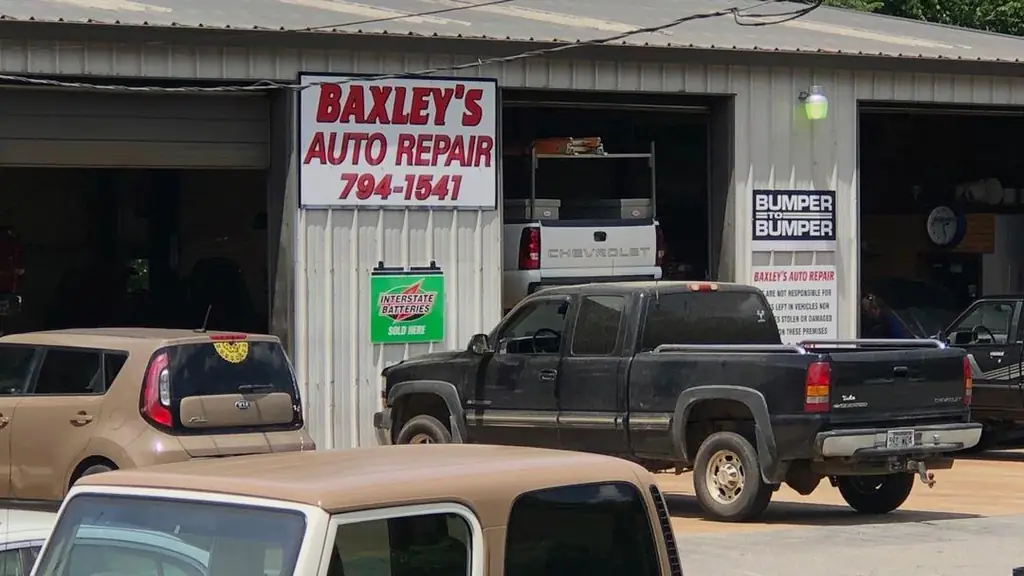
We sell Interstate Batteries here, and the charging system gets tested alongside whatever battery work is done, because a new battery installed on a failing alternator will be right back to a slow crank within a few weeks. Checking both at once is the only way to know the fix will actually hold.
Arkansas summers are hard on batteries in a way a lot of drivers don't expect, since heat degrades the internal plates faster than cold does, even though cold weather is when the failure usually gets noticed. A battery that's been quietly weakening through a hot summer often picks the first cold morning of fall to finally not turn over, and that's exactly when we see the most starting complaints come in.
DiagnosticsMost makes & models
Chasing an intermittent electrical fault
The hardest electrical complaints to fix are the intermittent ones, a window that works sometimes, a dash light that flickers on rough roads, a fault that clears itself before the car even reaches the shop. Those usually come down to a connector working loose, a wire chafing against a bracket, or a ground point corroding, and finding them means checking the circuit under the same conditions that trigger the fault rather than just checking it sitting still in the bay.
We service belts and hoses as part of the same electrical and charging inspection where it's relevant, since a slipping serpentine belt can starve the alternator of the drive it needs and mimic a charging fault that isn't actually electrical at all. Ruling that out first can save a customer from paying to chase a wiring problem that was really a worn belt the whole time.