The Brake Symptoms Worth Acting On This Week
A squeal is an early warning built into the pad on purpose, a grind means that warning already passed.
September 2, 2026 · 4 min read
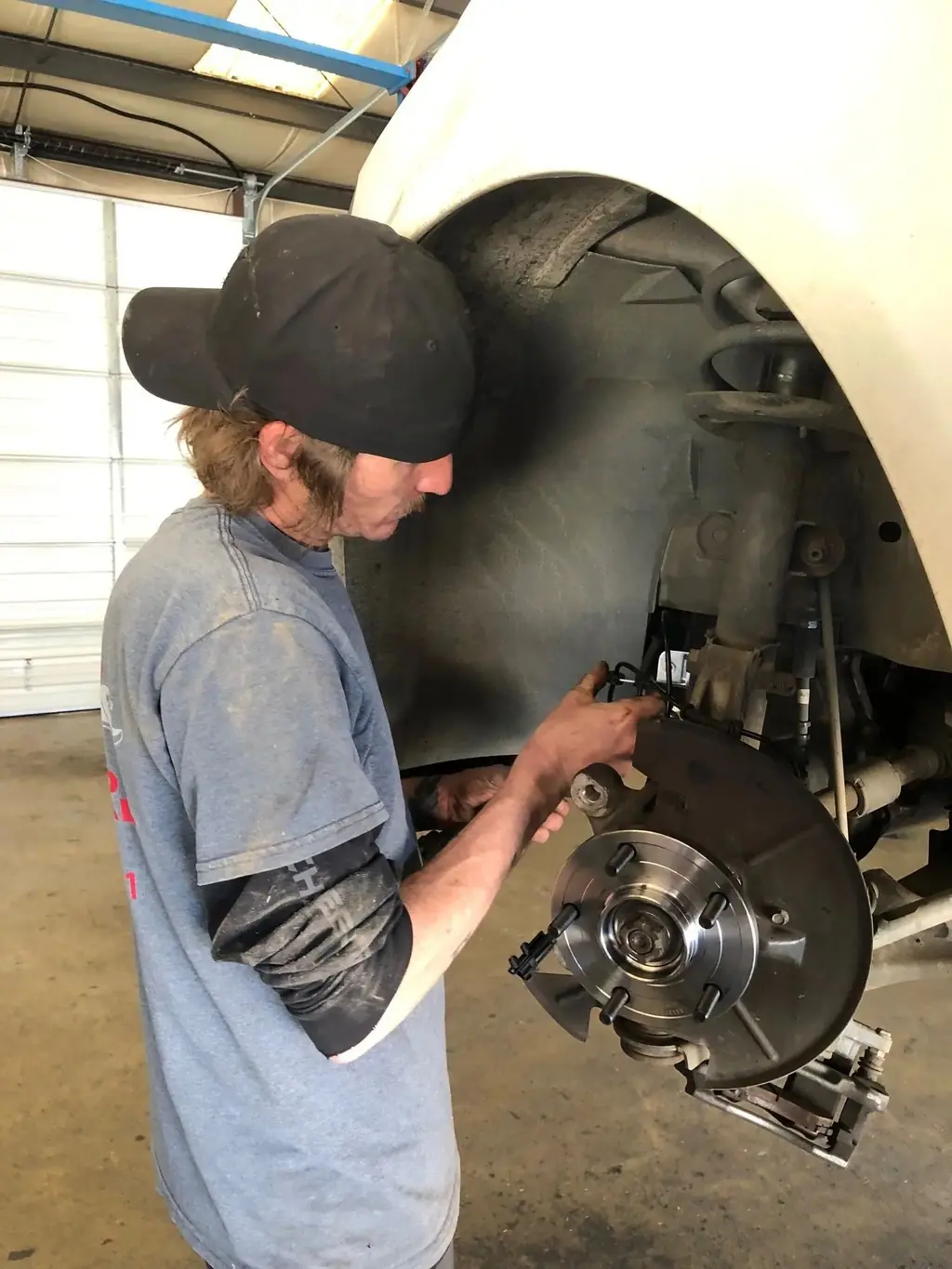
Brakes rarely fail all at once. They send warnings first, and knowing what those warnings actually mean is the difference between catching a problem while it's still a simple one and catching it after it's turned into something bigger.
Squeal Versus Grind, and Why the Difference Matters
A high pitched squeal when you brake is often intentional. Most brake pads have a small metal tab built into them, called a wear indicator, designed to touch the rotor and make that exact noise once the pad has worn down to the point where it needs replacing soon. It's an early warning, not an emergency. A grinding or grumbling noise is a different story. That usually means the pad material is gone entirely and metal is now contacting metal, backing plate against rotor. Grinding means you're actively damaging the rotor every time you brake, and it should get looked at right away rather than waiting for a convenient weekend.
What the Pedal Itself Is Telling You
Pay attention to how the pedal feels, not just what you hear. A pedal that feels soft, spongy, or sinks slowly toward the floor under steady pressure often points to air in the brake lines or a fluid leak, both of which affect how much stopping power you actually have. A pedal that pulses or vibrates under braking, especially at highway speed, usually points to a rotor that's worn unevenly, sometimes called warping, though it's more often uneven material transfer than true warping. Either symptom is worth a look before it gets more pronounced.
Pulling to One Side
If the car pulls left or right specifically when you brake, and drives straight the rest of the time, that's often a caliper that isn't releasing fully on one side, uneven pad wear side to side, or a stuck sliding pin. Left unaddressed, an uneven caliper wears one side's pad and rotor far faster than the other, and can eventually mean less braking power on that side exactly when you need it most.
How Wear Indicators Work, and Why Rotors Matter Too
Beyond the metal tab that squeals, some vehicles also have electronic wear sensors that trigger a dashboard warning light directly, worth taking just as seriously as the noise itself. Rotors wear too, not just pads, and they have a minimum thickness specification below which they can't safely be resurfaced or reused. A shop measuring rotor thickness during a brake job isn't padding the bill, it's confirming whether the rotors can be kept or need to come off with the pads.
Brake Fluid Is Part of the System, Not an Afterthought
Brake fluid absorbs moisture over time, even in a sealed system, and moisture in the fluid lowers its boiling point, which matters most exactly when you need brakes most: hard, repeated stops going downhill or in an emergency. It's a component of the system that's easy to forget about because it's not something you can see wearing.
This is part of why a multi-point inspection is worth having done periodically rather than only when something is already making noise. Pad thickness, rotor condition, and fluid condition can all be checked in a few minutes and compared against a known baseline, which is exactly how a squeal that's just starting gets caught before it becomes a grind, and how a fluid that's absorbed too much moisture gets flushed before it matters on a hard stop.
Why Waiting Costs More Than Acting
Pads are a relatively inexpensive, straightforward job. Grind through them to bare metal and you've likely damaged the rotor underneath, turning a pad replacement into a pad and rotor replacement. Keep driving on a grinding brake and you risk damaging the caliper too. None of that is scare talk, it's just how the parts are built: soft friction material wears against hard metal on purpose, so the pad is designed to be the sacrificial part. Once that's gone, everything underneath it starts absorbing the wear instead.
None of this requires guessing on your part. Most of it is visible or audible well before it becomes serious, which is exactly why it's worth paying attention the first time something sounds or feels different, rather than waiting to see if it goes away on its own.
Signs Worth Acting on This Week
- Squealing that's new or has gotten noticeably louder
- Any grinding or metal-on-metal sound
- A soft, sinking, or spongy pedal
- Vibration or pulsing when braking, especially at speed
- Pulling to one side under braking only
- A dashboard brake warning light
If any of that sounds familiar, it's worth getting checked before your next long drive around Saline County. Baxley's Auto Repair can take a look and give you a written estimate before anything is touched. Call (501) 466-7483 to get on the schedule.
Baxley's Auto Repair — (501) 466-7483
Call (501) 466-7483More articles
What Your Check Engine Light Is Actually Telling You
The light looks the same whether it's a loose gas cap or a real problem, so here's how to tell the difference before you spend a dime.
Why Car AC Fails in an Arkansas Summer, and What Fixing It Actually Involves
Refrigerant doesn't get used up the way oil does, so if your AC is weak, something is leaking, not just running low on its own.