What Your Check Engine Light Is Actually Telling You
The light looks the same whether it's a loose gas cap or a real problem, so here's how to tell the difference before you spend a dime.
September 2, 2026 · 4 min read
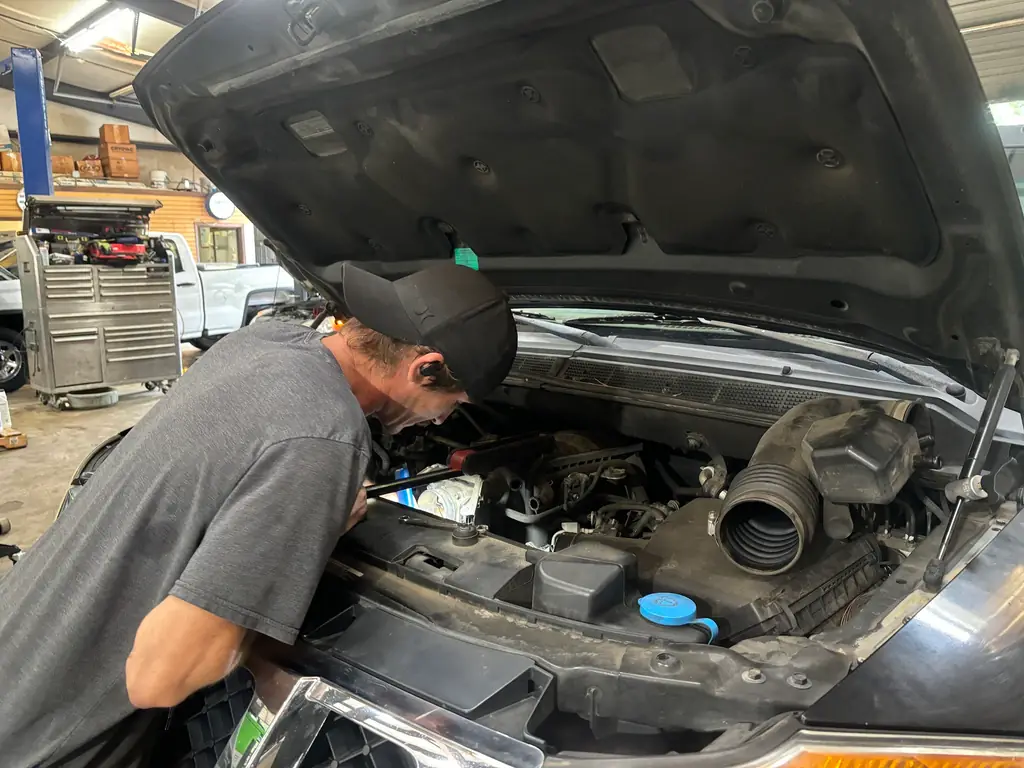
Your check engine light comes on and now you're staring at it wondering if you have five minutes to spare or five hundred dollars. Here's what's actually happening under the hood, and why guessing at the answer usually costs more than having it checked.
The Light Doesn't Know What's Wrong, It Just Knows Something Changed
The check engine light is not a diagnosis. It's a notification. Every car built since the mid 1990s runs a computer, the engine control module, that constantly watches dozens of sensors: oxygen levels in the exhaust, fuel trim, engine temperature, misfires, transmission behavior, and more. When one of those readings falls outside the range the manufacturer programmed as normal, the computer stores a code and lights up the dash. That's it. The light itself carries no information about severity or cost. A code that means your gas cap is loose and a code that means you have a cylinder misfiring look identical from the driver's seat: same light, same color, same shape.
What an OBD-II Code Actually Is
Since 1996, every car sold in the U.S. has used a standardized diagnostic system called OBD-II, On-Board Diagnostics, second generation. When something trips a sensor threshold, the computer stores a code, something like P0420 or P0171, in its memory. A scan tool reads that code back out. The code points to a system, not necessarily a part. P0420, for example, points to catalytic converter efficiency, but the actual cause could be the converter itself, a failing oxygen sensor feeding it bad data, or an exhaust leak upstream. That's why a code is the starting point of a diagnosis, not the diagnosis itself. Anyone who tells you a part number off a scanner readout without actually looking at the car is guessing just like you were.
The Loose Gas Cap Story Is Real
One of the most common reasons a check engine light comes on for an otherwise healthy car is a gas cap that isn't sealing. The fuel system is sealed and pressurized as part of the emissions system, and if the cap is loose, cracked, or just not clicked all the way, the computer reads it as a leak and sets a code. If your light came on right after a fill-up, that's worth checking first. Tighten the cap until it clicks several times, and the light often resets itself within a few drive cycles. It's also exactly why a free scan matters: rather than assuming the worst, you find out in a few minutes if it is a two-second fix or something that needs real attention.
Steady Light Versus Flashing Light
This distinction matters more than almost anything else on this list. A steady check engine light means the computer detected a problem worth investigating, but it isn't asking you to stop the car right now. A flashing check engine light means something more urgent, most often a misfire severe enough that unburned fuel is reaching the catalytic converter, which can overheat it to the point of damage. If your light is flashing, get it looked at as soon as reasonably possible rather than waiting until next payday. Continuing to drive hard on a flashing light is one of the more expensive mistakes we see, because a code that was cheap to fix turns into a replaced catalytic converter.
It's Not Just the Engine, Emissions Matter Too
Even where a car doesn't need an annual emissions test, a check engine light tied to the emissions system means your car is very likely putting out more pollutants than it should, and it can also mean lower fuel economy, since the computer often falls back to a conservative fuel strategy when it can't trust a sensor reading. So a check engine light isn't only a question about whether your engine is about to break, it's also a question about what you're burning through in gas while you wait.
Common Reasons the Light Comes On
- Loose, cracked, or missing gas cap, the most common false alarm
- Failing oxygen sensor
- Worn spark plugs or ignition coils causing a misfire
- Catalytic converter efficiency below threshold
- Faulty mass airflow sensor
- EVAP system leak, the fuel vapor recovery system
A code reader can pull the stored code in a couple of minutes, and it costs nothing to find out if the cause is a loose cap or something that needs real diagnostic time. We run a free warning light scan at Baxley's Auto Repair in Benton for exactly that reason, so you know what you're dealing with before you decide what to do about it. Give us a call at (501) 466-7483 and we'll get you scheduled.
Baxley's Auto Repair — (501) 466-7483
Call (501) 466-7483More articles
Why Car AC Fails in an Arkansas Summer, and What Fixing It Actually Involves
Refrigerant doesn't get used up the way oil does, so if your AC is weak, something is leaking, not just running low on its own.
The Brake Symptoms Worth Acting On This Week
A squeal is an early warning built into the pad on purpose, a grind means that warning already passed.