How Often Your Car Actually Needs an Oil Change
The right interval depends on the oil, the engine, and how the car is actually driven, not a sticker left over from another decade.
September 2, 2026 · 4 min read
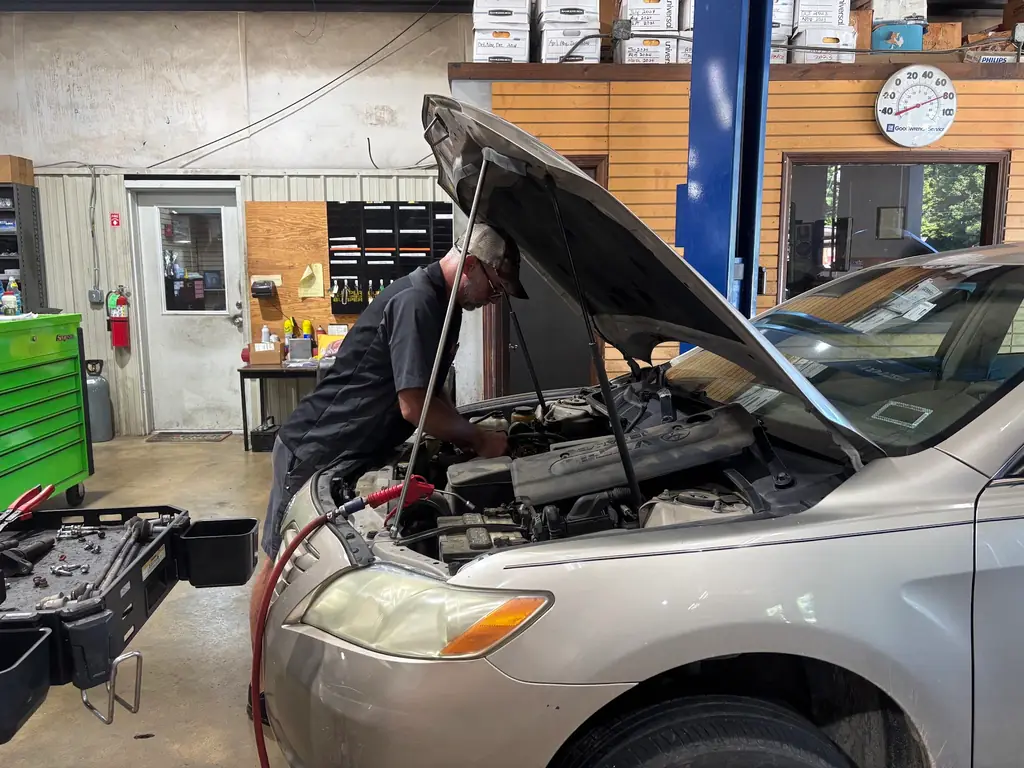
Ask five people how often to change their oil and you'll get five different answers, most of them left over from a sticker on a windshield or something a relative said in the 1990s. The real answer depends on the oil, the car, and how you actually drive it.
Where 'Every 3,000 Miles' Actually Came From
That number is largely a holdover from decades ago, when conventional motor oils genuinely broke down faster and engines had looser tolerances. Modern engines and modern oils, especially synthetic and synthetic blend oils, are built to go considerably longer between changes. Sticking rigidly to 3,000 miles on a modern vehicle running synthetic oil isn't dangerous, but it usually means paying for more oil changes than your car actually needs.
Synthetic, Conventional, and High-Mileage Aren't Just Marketing Tiers
Conventional oil is the most basic option and breaks down fastest under heat and stress, which is why it typically needs the shortest interval between changes. Full synthetic oil is engineered for more consistent molecular structure, which means it resists breaking down at high temperatures and keeps its protective properties longer, allowing longer intervals. High-mileage oil is formulated for engines with more wear, typically past 75,000 miles, with additives meant to condition seals and reduce the small leaks and oil consumption that show up as an engine ages. None of the three is universally the right choice, the correct one depends on your specific engine and how many miles are already on it.
Viscosity, the number printed as something like 5W-30 on the bottle, is a separate question from synthetic versus conventional, and it matters just as much. That number describes how the oil flows at cold start compared to full operating temperature, and it's chosen by the manufacturer for a reason, tighter engine tolerances and different bearing clearances mean a viscosity that's correct for one engine can be wrong for another even if the mileage and driving style are identical. Using whatever viscosity happens to be on sale isn't the same as using what the engine was actually built around.
The Sticker in Your Windshield Versus What Your Car Actually Needs
Every manufacturer publishes a recommended service schedule, and that schedule is the right starting point. But manufacturer schedules are usually written for what they call normal driving conditions, and a meaningful share of everyday driving doesn't actually meet that definition. If your schedule doesn't distinguish, or you're not sure which category you fall into, it's worth asking rather than assuming the longest interval on the sticker applies to you.
Short Trips and Heat Work Against Your Oil
An engine needs to reach full operating temperature to burn off condensation and fuel byproducts that build up inside it, and a lot of short trips, the school run, quick errands around Benton, never let that happen. That kind of driving is harder on oil than steady highway miles, even though it puts fewer total miles on the odometer. Combine that with an Arkansas summer, where under-hood temperatures run high for months at a stretch, and oil in a car that mostly does short local trips can need attention sooner than the mileage number alone would suggest.
What a Multi-Point Inspection Actually Catches
An oil change on its own only tells you about the oil. A multi-point inspection done at the same time is what catches the things that turn into bigger problems if they go unnoticed: a belt starting to crack, a hose getting soft, brake pads wearing thin, a battery testing weak before it strands you on a hot afternoon. It's the difference between changing the oil and actually knowing the state of the car.
What We Actually Recommend
In practice, we tell most customers to plan on service somewhere between 5,000 and 7,500 miles, adjusted for the oil type in use and how the vehicle is actually driven. That range accounts for real-world Arkansas conditions, the mix of short trips and highway miles most people actually do, without swinging to either extreme.
Quick Guide to Picking a Side of the Range
- Full synthetic generally supports the longer end of the range
- Conventional oil generally needs the shorter end
- Mostly short trips or stop-and-go driving pushes you toward the shorter end regardless of oil type
- Towing, hauling, or consistent hot-weather driving pushes toward the shorter end too
- When in doubt, a quick look at the oil itself and a mileage check settles it
If you're not sure what your car actually needs, bring it by and we'll check the oil condition and give you a straight answer rather than a default. Baxley's Auto Repair, (501) 466-7483.
Baxley's Auto Repair — (501) 466-7483
Call (501) 466-7483More articles
What Your Check Engine Light Is Actually Telling You
The light looks the same whether it's a loose gas cap or a real problem, so here's how to tell the difference before you spend a dime.
Why Car AC Fails in an Arkansas Summer, and What Fixing It Actually Involves
Refrigerant doesn't get used up the way oil does, so if your AC is weak, something is leaking, not just running low on its own.